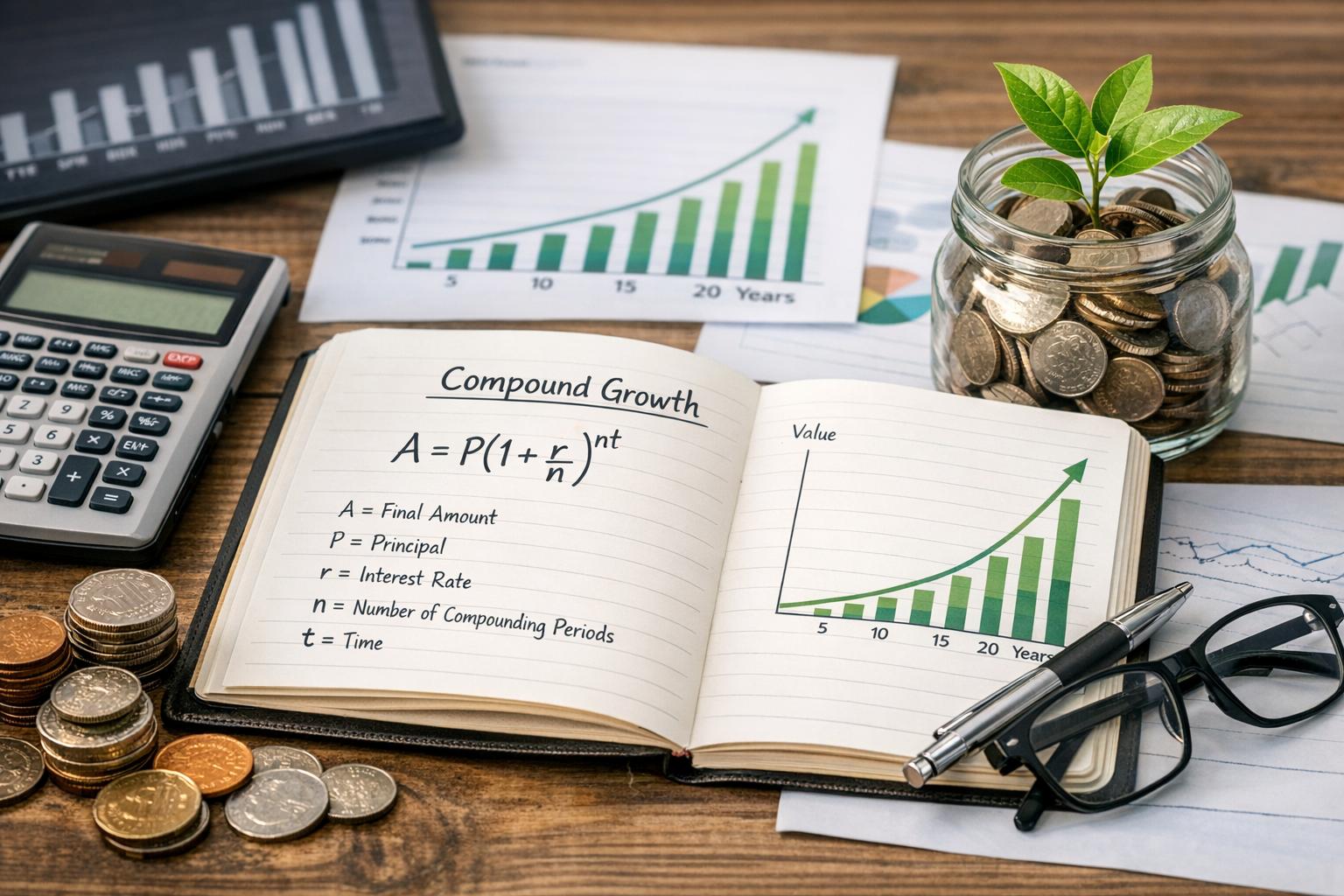
Compound growth is a mathematical process in which an amount earns growth on its original value and on gains accumulated during earlier periods. The same principle applies to savings interest, investment returns, inflation, business revenue, population change, and unpaid debt. The defining feature is that each period’s gain becomes part of the base used for … Read More “The Mathematics of Compound Growth” »

Month: September 2026
Financial markets perform two related functions. They allow participants to buy and sell assets, and they convert incoming information into prices. Every order expresses a view, whether the trader has formed that view through detailed research, an automated signal, a need for cash, or a simple change in risk tolerance. Shares, bonds, currencies, commodities, and … Read More “How Financial Markets Process Information” »
The relationship between risk and return sits at the centre of investment analysis. Assets with higher expected returns usually expose investors to a greater chance of loss, wider price movements, uncertain income, or a longer wait before capital can be recovered. That does not mean taking more risk automatically produces more profit. A poorly judged … Read More “The Science of Risk and Return” »